• Is The Issue Of Health Care Pushing Your Buttons?

  • Share Your Story

    If you have a story to share about healthcare issues in South Carolina, we want to hear it!

Is There A Cure For The Healthcare Mess?

From Dollars & Sense:

By Gerald Friedman

America’s broken health-care system suffers from what appear to be two separate problems. From the right, a chorus warns of the dangers of rising costs; we on the left focus on the growing number of people going without health care because they lack adequate insurance. This division of labor allows the right to dismiss attempts to extend coverage while crying crocodile tears for the 40 million uninsured. But the division between the problem of cost and the problem of coverage is misguided. It is founded on the assumption, common among neoclassical economists, that the current market system is efficient. Instead, however, the current system is inherently inefficient; it is the very source of the rising cost pressures. In fact, the only way we can control health-care costs and avoid fiscal and economic catastrophe is to establish a single-payer system with universal coverage.

The rising cost of health care threatens the U.S. economy. For decades, the cost of health insurance has been rising at over twice the general rate of inflation; the share of American income going to pay for health care has more than doubled since 1970 from 7% to 17%. By driving up costs for employees, retirees, the needy, the young, and the old, rising health-care costs have become a major problem for governments at every level. Health costs are squeezing public spending needed for education and infrastructure. Rising costs threaten all Americans by squeezing the income available for other activities. Indeed, if current trends continued, the entire economy would be absorbed by health care by the 2050s.

Conservatives argue that providing universal coverage would bring this fiscal Armageddon on even sooner by increasing the number of people receiving care. Following this logic, their policy has been to restrict access to health care by raising insurance deductibles, copayments, and cost sharing and by reducing access to insurance. Even before the Great Recession, growing numbers of American adults were uninsured or underinsured. Between 2003 and 2007, the share of non-elderly adults without adequate health insurance rose from 35% to 42%, reaching 75 million. This number has grown substantially since then, with the recession reducing employment and with the continued decline in employer-provided health insurance. Content to believe that our current health-care system is efficient, conservatives assume that costs would have risen more had these millions not lost access, and likewise believe that extending health-insurance coverage to tens of millions using a plan like the Affordable Care Act would drive up costs even further. Attacks on employee health insurance and on Medicare and Medicaid come from this same logic—the idea that the only way to control health-care costs is to reduce the number of people with access to health care. If we do not find a way to control costs by increasing access, there will be more proposals like that of Rep. Paul Ryan (R-Wisc.) and the Republicans in the House of Representatives to slash Medicaid and abolish Medicare. (more…)

House Passes Plan To Phase Out Medicare, Slash Medicaid

From Talking Points Memo:

Brian Beutler | April 15, 2011, 2:23PM

House Republicans voted Friday in favor of a vision of the future without Medicare, with a significantly eroded Medicaid, and with lower taxes on wealthy Americans. By a vote of 235-193, they passed their budget resolution — an opening bid in a broader partisan fight about spending and taxes that will dominate politics in Washington, DC for the rest of the year.

Four Republicans voted with all Democrats against the so-called “Path to Prosperity.” Two Republicans and five Democrats didn’t vote.

It’s also political poison. The GOP plan would slowly phase out the current Medicare system and replace it by offering beneficiaries partially subsidized private insurance (ironically, much like Obamacare). It would turn Medicaid into a block-grant program, allowing states to roll back currently guaranteed benefits for the poor and disabled. And it would eliminate most of the savings achieved from cutting these entitlements lowering the tax burden on wealthy Americans.

(more…)

Sorry, This Ain’t No April Fool’s…


Synopsis: According to Congressman Louie Gohmert and his Texas-sized tinfoil hat, U.S. intervention in Libya is actually an Obama plot to tucker out our military, thereby enabling Obama to call up his health-care-reform stormtroopers to impose Shariah, or some other fantastical atrocity, on us all.

Nobody at S.C. Health Care Voices is calling the Affordable Care Act a perfect piece of legislation, but it would be nice to debate health care reform at an adult level, believing all sides have Americans’ best interests at heart.

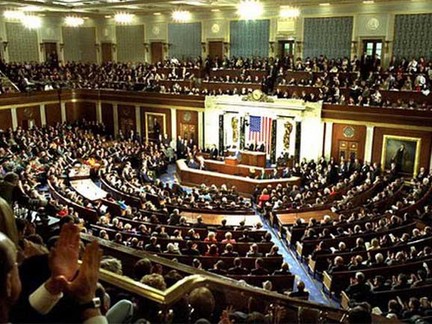
Instead, from the floor of the U.S. House of Representatives, we’re getting this caliber of bunkum, motivated by Gohmert only knows…

Talking Points Memo has the full story below:

(more…)

Follow

Get every new post delivered to your Inbox.